
BACK TO Articles

Decoding the data lakehouse and open source – the AI foundation that delivers

If you’ve been in a meeting recently where someone threw around words like data lakes, data lakehouse, open source frameworks, or AI pipelines, and you nodded along while secretly wondering what on earth they were talking about, you’re not alone. 

Here’s the short version: 

  • data warehouse is your neatly organised library, storing structured data (think spreadsheets and databases). 
  • data lake is a giant storage reservoir where unstructured data flows in, organised or not (think images, scribbles, photos, logs, sensor data). 
  • lakehouse brings the two together. So it can store all of your data, structured, semi structured or otherwise, so all of your information is captured, even if you don’t know how you’ll use it yet. 

It’s the foundation of future proofed data architecture. You’re no longer tied in to one system, your data remains secure, governed and available until you’re ready to clean, organise and apply analytics or AI to unlock the gold! 

Is open source an opportunity or risk? 

Open source solutions unlock huge potential through transparency, flexibility, faster innovation and a global community working to improve the tools you choose. It also means you’re not tied to one vendor’s roadmap which removes headaches for many organisations operating multiple legacy data warehouses and systems embedded within. 

Of course, without governance it can be a risk with questions around security, support, and consistency. That’s why the platforms we work with address this by taking the best of open source and wrapping it in enterprise-grade reliability, compliance, and support, so organisations get the innovation edge without the headaches or the risk. 

Want to know more? 

Read to stop talking and start futureproofing and knock down the walls of siloed data architecture? Or de-jargonise the world of AI and Data? 

If you’re keen to know more, connect with our Practice Lead, Jared Bagnall, or book an 30 minute exploration meeting here.
Looking for something specific?

Search our Archive to find content that piques your interest.
SEARCH

Recents Posts

September 14, 2026
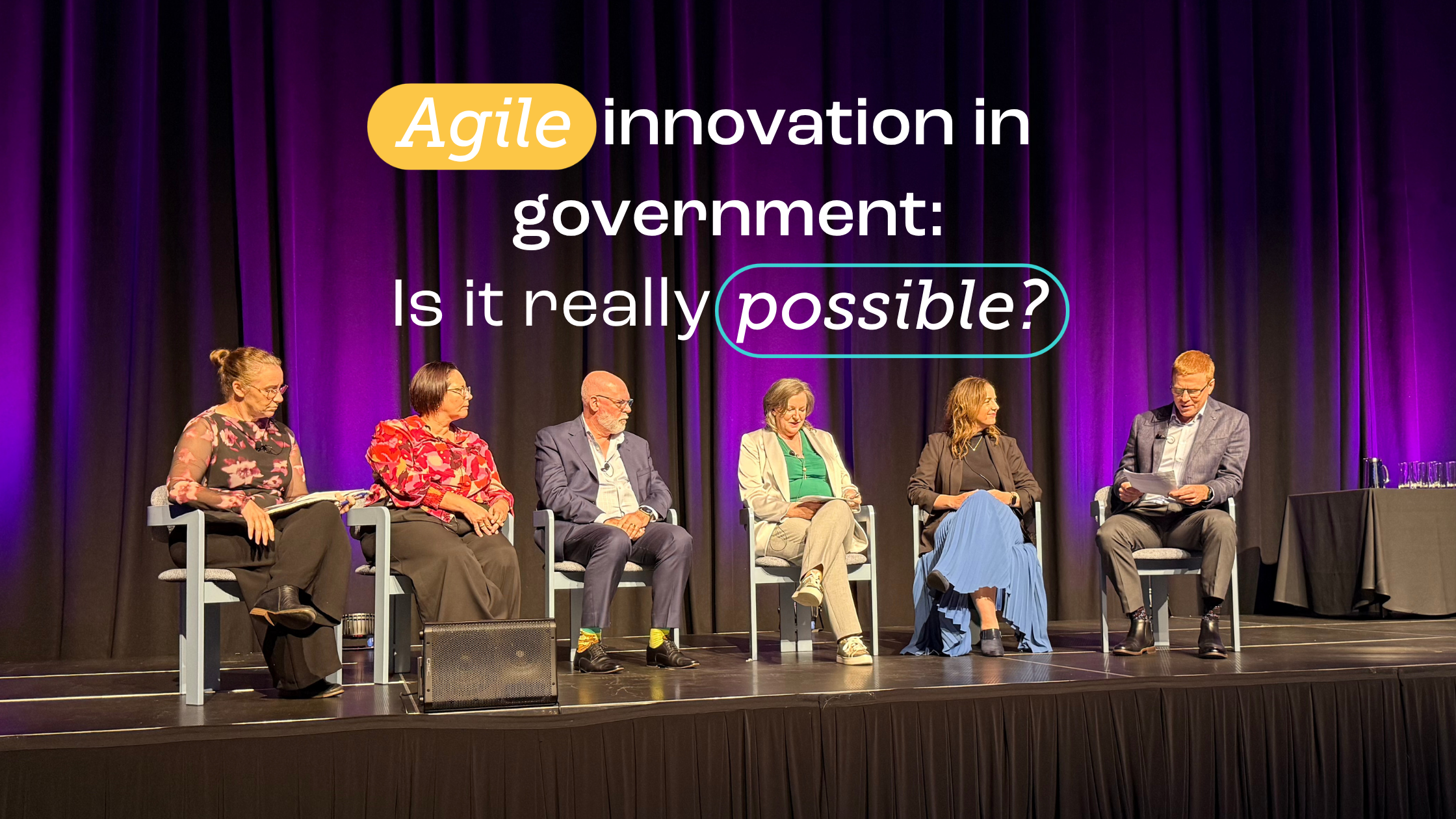
Government can be agile. The question is why it isn’t more often.
By David Lockie At the Government Innovation Showcase last week, my job was to moderate a panel on Agile Innovation in Government: Is It Really Possible? And to be clear, the room was there to hear from the panellists, not me! I had a pretty formidable group to keep the conversation moving between: Jeremy Janes,…
Read more
September 9, 2026
The Office of AI is a signal. What should organisations do with it?
By Euan Kennedy On 15 July, the Australian Government established a new Office of AI inside the Department of the Prime Minister and Cabinet, with a remit to coordinate AI policy across government and develop Australia’s new national AI standards. Just over a month later, National Cabinet backed a nationally consistent framework including mandatory standards…
Read more
September 9, 2026
Brisbane 2032 Olympics: the capability every delivery team will need
By Madison Steele The Brisbane 2032 Olympics will create some of the most visible, high-pressure delivery work Queensland Government has undertaken in years. There will be major infrastructure programs, new digital services, changes in demand, cross-agency projects and a very public deadline. For the people involved, it will also be a rare opportunity to work…
Read more
September 8, 2026
Want more agile government projects? Start with half, keep the rest for improvement.
I’m Dave Lockie, CEO of Mojo Soup and for over 17 years, we’ve worked with government and private organisations across health, education, infrastructure and beyond, often partnering with local and state government teams to deliver and improve digital project outcomes. That gives us a pretty practical view of agile: what works, what gets in the…
Read more